Pharmacy Business in Nepal: What to Check Before Buying
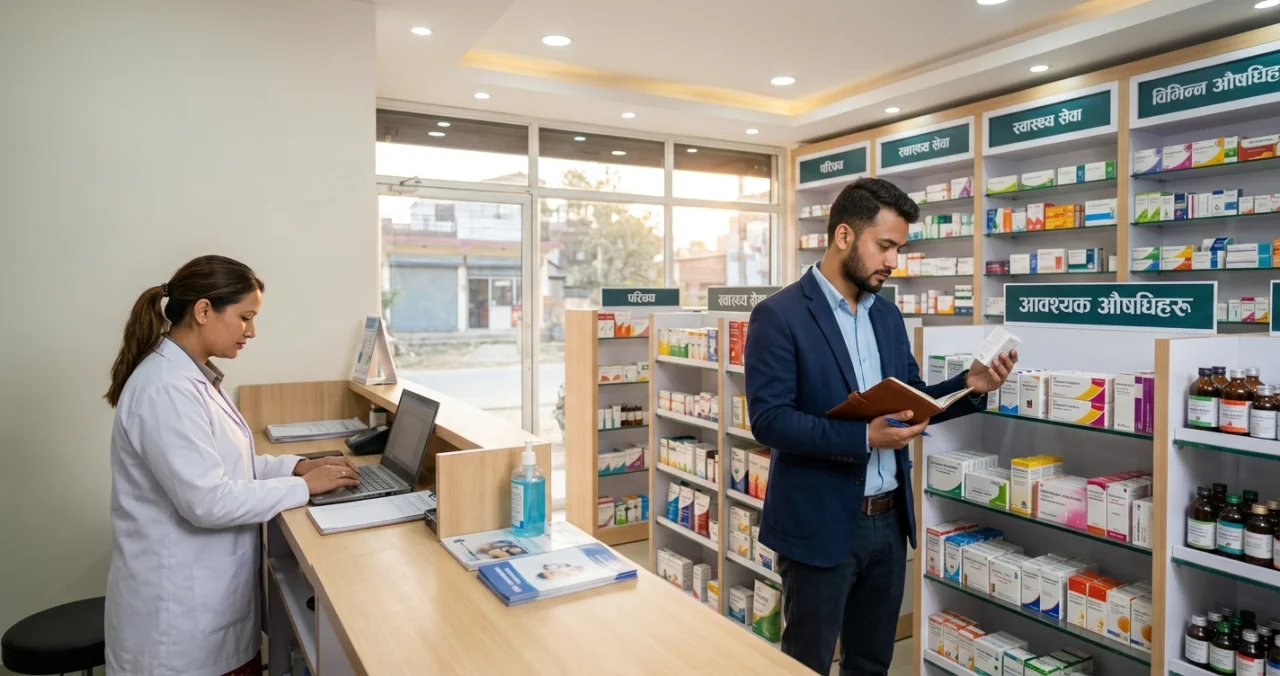
Pharmacy Business in Nepal: What to Check Before Buying
A pharmacy is one of the more regulated, but also more stable, small business types available for purchase in Nepal. Steady demand for medicine and healthcare products makes pharmacies relatively resilient compared to trend-dependent businesses — but the regulatory side means buyers need to do extra homework before purchasing one.
Why Pharmacies Can Be a Solid Investment
Consistent demand Medicine and healthcare products are necessities, not discretionary purchases — this gives pharmacies a level of demand stability that many other retail businesses don't have.
Established trust matters Customers tend to stick with a pharmacy they trust, especially for regular medication needs, which means a pharmacy with an existing loyal customer base carries real value beyond its physical inventory.
Higher barrier to entry Since pharmacies require licensing and a certified pharmacist, there's naturally less casual competition compared to something like a grocery shop, which can work in an owner's favor once established.
What to Check Before Buying

1. Licenses and registration are fully in order This is the most important check for a pharmacy specifically. Confirm the pharmacy license, drug registration, and any required certifications are valid, transferable, and not close to expiring. A missing or improperly transferred license can shut down a pharmacy immediately after you take over.
2. Whether a licensed pharmacist is included Many pharmacies in Nepal require a registered pharmacist to be present or associated with the license. Clarify whether the current pharmacist is staying on, or whether you'll need to arrange your own — this affects both operations and legal compliance from day one.
3. Inventory value and expiry dates Pharmacy inventory has a shelf life. Check current stock for expiry dates before agreeing on how much of the inventory value is included in the sale price — buying expired or soon-to-expire stock at full value is a common way buyers lose money in this type of purchase.
4. Supplier relationships Established relationships with medicine distributors and wholesalers can be valuable and take time to rebuild — ask whether these relationships transfer with the sale or need to be renegotiated from scratch.
5. Location and nearby competition Check for other pharmacies or hospitals/clinics nearby — proximity to a hospital or clinic often drives strong, consistent walk-in traffic.
Red Flags to Watch For
- Licensing documents that are unclear, expired, or in someone else's name with no clear transfer process
- Reluctance to let you review current inventory and expiry dates
- No licensed pharmacist plan in place going forward
- Declining foot traffic due to new competition or a nearby hospital/clinic closing
Browse Pharmacy Listings
Smart Bikri lists pharmacies and medical stores for sale across Nepal. Browse current listings to explore options, and make sure to verify all licensing details directly with relevant authorities before finalizing any purchase.
Buying a pharmacy comes with more regulatory steps than many other small businesses, but for buyers willing to do the proper checks, it remains one of the more stable business types in Nepal's retail landscape.
Smart Bikri — Buy Smart, Sell Easy. Nepal's trusted marketplace for buying and selling shops, restaurants, and businesses nationwide.